One of the big things I learned moving from supporting a software company to supporting a capital equipment manufacturing company is that closing the deal is nowhere near the end of the story. At a software company fulfilling an order is far easier because everything is electronic much of the time – there’s no need to assemble and ship physical items. However, in the world of manufacturing that is far from the case. Nearly every single sale comes with a need to physically procure, assemble and ship product to a customer.
This reality makes managing your business as a manufacturer a different challenge than if you are selling intangible items. You need to balance having enough inventory on hand to fulfill your orders but also not have too much inventory taking up valuable space on your balance sheet (and in your facilities too!). This is even more crucial if any of your inventory comes with an expiration date on it! The same holds true in having enough people to fulfill your orders but not be overstaffed with dead time hitting your companywide expenses.
Thankfully we have great tools today that can be used in concert to help better plan the inventory one needs to keep on hand to support their current and anticipated orders. A few key tools to manage this include the following:
- ERP System with Bill of Material (BOM) required to build a given product. This ‘recipe’ is critical for know what goes into a given product.
- Sourcing procurement system – this gives you information on cost, lead time and hopefully different vendors for a given component if it is especially critical.
- Customer Relationship Management (CRM) System used by your team to track prospective opportunities with an expected close date, customer desired ship/receipt date and likelihood of success of a given deal closing. Pipeline management is its own critical topic that is crucial to a company in many ways beyond its value here.
So how can these systems come together to give you an idea as to whether or not you have sufficient inventory in stock? You pull pieces of data from all of these to give you a better idea of what you’ll need, when you’ll need it and how much you might need to order.
The ERP system can tell you what is open and what materials are needed to fulfill those orders. This combination can tell you how much you need right now to fulfill the orders you currently have on-hand. Combine that with a safety stock and you have a quick metric to see if you enough on hand right now. Congrats – the easy part is done!
That harder part is trying to understand which is likely to come in the door in the form of new orders and whether or not you’re properly stocked to meet those orders. This is where the value of data from a well-managed CRM really starts to show its value. That pipeline data can be used to look at an estimate of additional demand over the next quarter, half-year or maybe even a year or more depending on the type of goods you manufacture and what the lead time looks like.
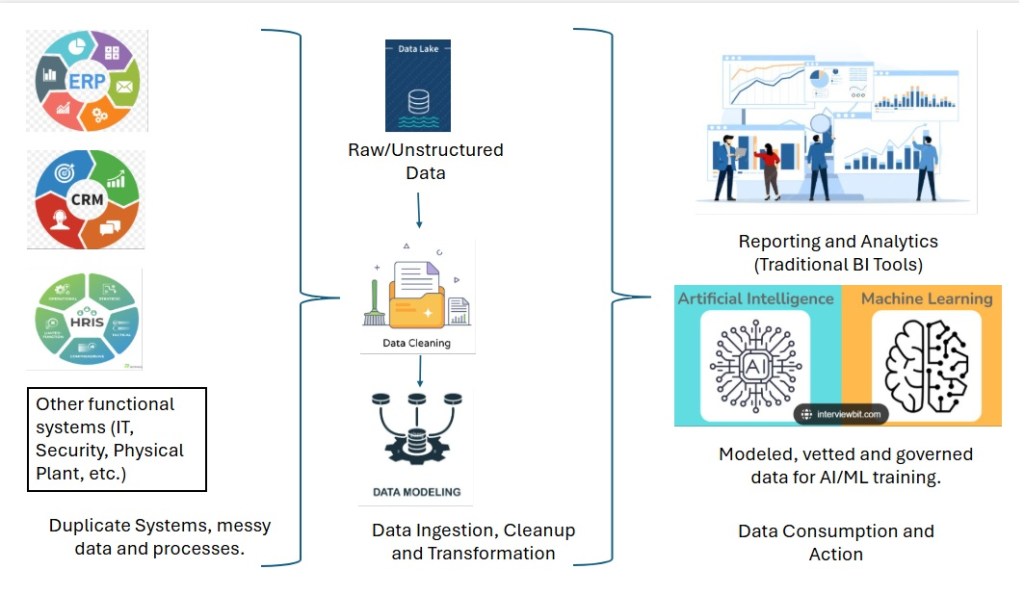
These pieces can really come together to help you optimize the inventory you have in stock and represents a nice example of what leveraging data can do for you in running your business more efficiently. It’s even better when you can all of this flowing into a centralized data warehouse and visualization platform (like Tableau or PowerBI) with automatic refreshes so you don’t need to export documents into excel, refresh queries/pivot tables and wait on a new version whenever you need to make a decision. It’s a great example of having valuable, actionable data available to you in a easily accessible format on-demand and is one of the ways that leveraging Business Intelligence can really help your business. If you’re interested in learning more please reach and I’d be happy to schedule a call with you!
You can use the form below, email me (shawn@smartscaleanalytics.com) or call me. I’d love to hear from you!
https://forms.monday.com/forms/5d98c92660083c884b97daef6dffb459?r=use1

 Smart Scale Analytics
Leave a comment